Partner John Singer Sargent
Queer Places:
Art Students League of New York, 215 W 57th St, New York, NY 10019
École des Beaux-Arts, 14 Rue Bonaparte, 75006 Paris
Milton Cemetery, 211 Centre St, Milton, MA 02186, United States
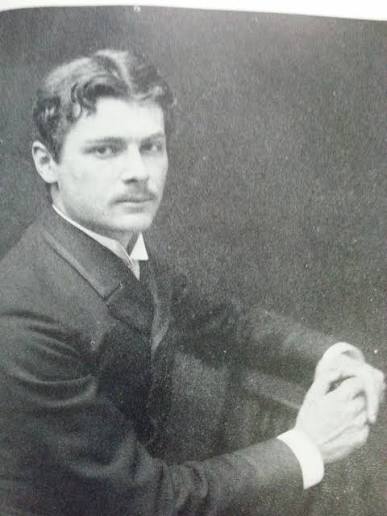 Dennis Miller Bunker (November 6, 1861 – December 28, 1890) was born on November 6, 1861, in New York City, New York, to parents Matthew Bunker (1830–1900) and Mary Ann
Eytinge Bunker (1832–1905), alongside his siblings Paul, Mary, and Ruth. He began his formal artistic training at the National Academy of Design and the
Art Students League of New York. After exhibiting his work in New York City and Boston in 1880 and 1881, he traveled to Paris, France, in 1882 to study at the
École Nationale Supérieure des Beaux-Arts under the renowned painter and sculptor Jean-Léon Gérôme.
Dennis Miller Bunker (November 6, 1861 – December 28, 1890) was born on November 6, 1861, in New York City, New York, to parents Matthew Bunker (1830–1900) and Mary Ann
Eytinge Bunker (1832–1905), alongside his siblings Paul, Mary, and Ruth. He began his formal artistic training at the National Academy of Design and the
Art Students League of New York. After exhibiting his work in New York City and Boston in 1880 and 1881, he traveled to Paris, France, in 1882 to study at the
École Nationale Supérieure des Beaux-Arts under the renowned painter and sculptor Jean-Léon Gérôme.
His European artistic education extended beyond the classroom. In the summer of 1883, he and fellow art students
Charles A. Platt and Kenneth R. Cranford left Paris to paint in the French countryside and along the Normandy seacoast,
returning to school in the autumn. The following year, they painted in Brittany before Bunker returned to America in the fall of 1884. Upon his return, he was elected to the
Society of American Artists, settled in Boston, and became an art teacher and a close associate of prominent artists and cultural figures.
Bunker's social and creative life was deeply intertwined with Boston's vibrant, albeit clandestine, queer community of the late nineteenth century. He was a prominent
member of The Tavern Club, an exclusive men's club originally located at 74 Boylston Street, which served as a gathering space for notable gay men of the era, including
W. Sturgis Bigelow, Bertram Goodhue,
Henry James, Augustus Saint-Gaudens,
George Santayana, and John Singer Sargent, alongside prominent heterosexual
figures of Boston high society.
A pivotal turning point in Bunker's life occurred in 1887 when the formidable art patron Isabella Stewart Gardner
introduced him to John Singer Sargent. Gardner, known for matchmaking men she believed would form a compatible pair, successfully fostered an intense, intimate bond between
the two artists. The relationship flourished as Bunker and Sargent painted together, and Bunker spent the summer of 1888 in England with Sargent's family, an experience that
completed his immersion into Impressionism. Sargent reportedly memorialized Bunker by including an image of him in his Frieze of the Prophets at the Boston Public Library
and painted a tender portrait of Bunker in a bucolic country setting in 1888. Gardner took immense pride in the couple, displaying their photographs side-by-side in her
mansion, and a painting by Bunker remains preserved within the Isabella Stewart Gardner Museum today.
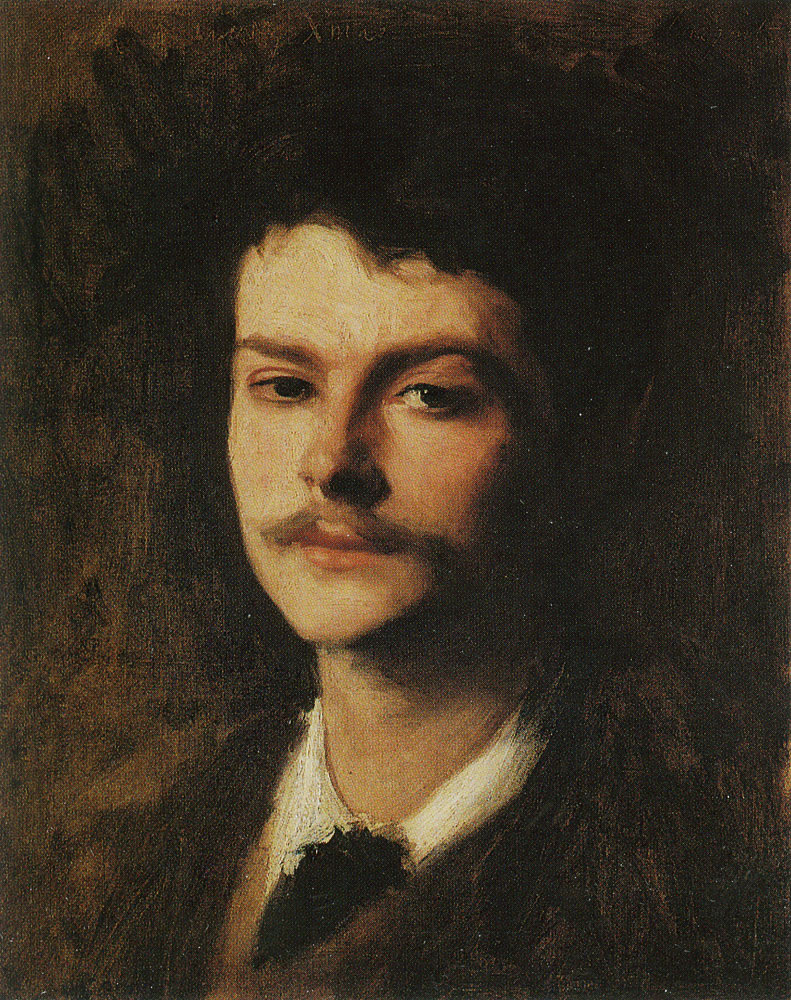
by John Singer Sargent, c. 1887
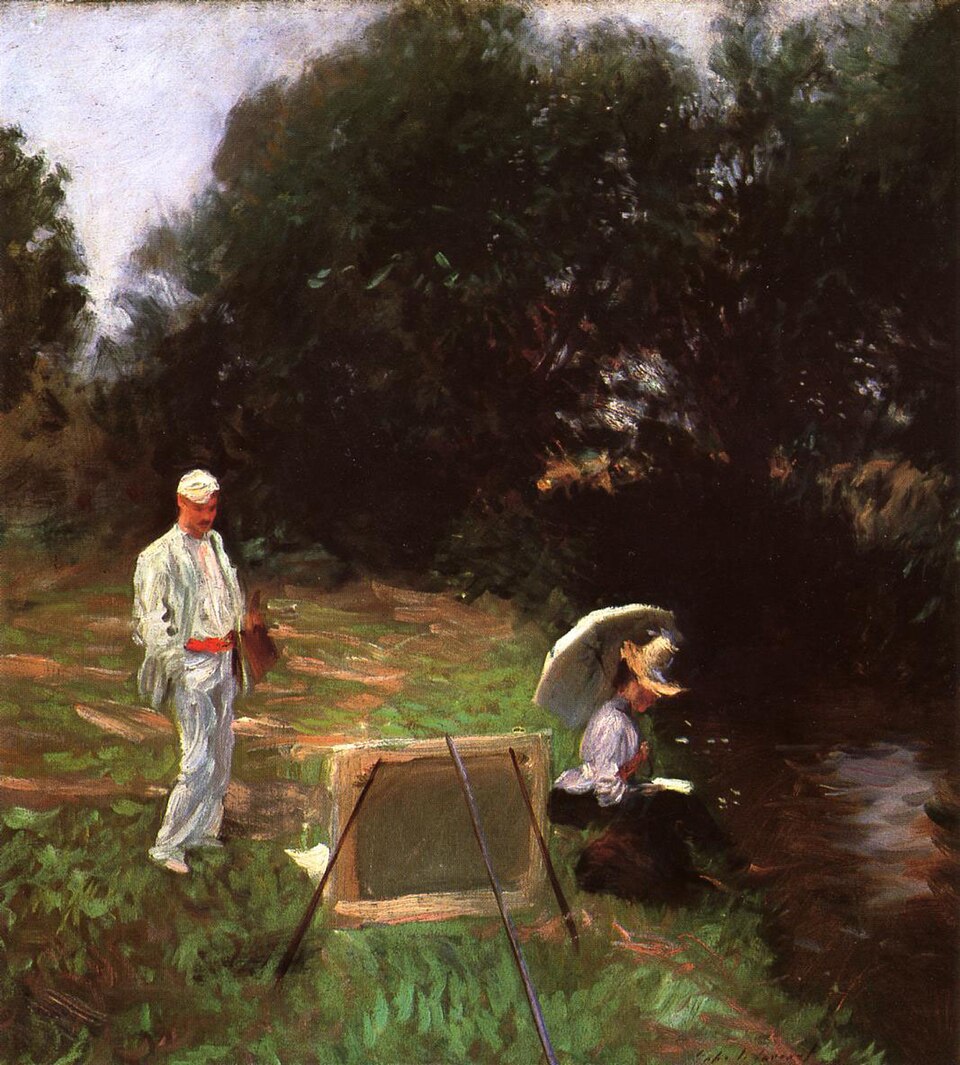
Dennis Miller Bunker Painting at Calcot, by John Singer Sargent, 1888
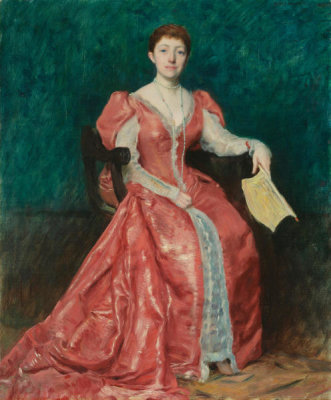
Isabella Stewart Gardner, 1889 by Dennis Miller Bunker
As his relationship with Sargent was flourishing, Bunker also crossed paths with other figures in their shared circle, including musician
Charles Martin Loeffler, whom Sargent had introduced into the Gardner orbit. Bunker and Loeffler spent considerable time
together, mutually influencing each other's artistic endeavors.
Despite the deep emotional ties of his bohemian and queer social circles, Bunker's life took a traditional turn in October 1890 when he married Eleanor Hardy
(later Platt). However, his promising career and newly established domestic life were cut short tragically just two months later. Dennis Miller Bunker died on
December 28, 1890, at the age of twenty-nine in Boston, Massachusetts, from heart failure caused by cerebral meningitis stemming from influenza.
As one of the earliest American painters to apply the innovative style of Impressionism, his early death was viewed by numerous art critics and historians as a
devastating loss that denied him the chance to become a leading figure of the burgeoning movement in American art. Due to his untimely passing, his works fell into relative
obscurity until artist R. H. Ives Gammell extensively researched and published a biography of him in 1953. His notable works include The Pool, Medfield (1889), located in
the Museum of Fine Arts in Boston, Portrait Sketch of Eleanor Hardy Bunker (1890), and Meadow Lands (1890).
Following his passing, his friends—notably the renowned sculptor Augustus Saint-Gaudens and architect Stanford White—created
his headstone. Bunker was laid to rest in Milton Cemetery in Milton, Norfolk County, Massachusetts, located on the hill left of the duck pond on Pine Avenue near his Hardy
relatives.
References:
Other references:
- Dennis Miller Bunker by R. H. Ives Gammell (Coward-McCann, 1953) – The first comprehensive study and biography of the artist, featuring personal letters provided by Bunker's widow.
- Dennis Miller Bunker (1861-1890) Rediscovered by Theodore Stebbins with Charles B. Ferguson (New Britain Museum of American Art, 1978) – A museum exhibition catalog and essay collection exploring his life and works.
- Dennis Miller Bunker: American Impressionist by Erica E. Hirshler, with contributions by David Park Curry and others (Museum of Fine Arts, Boston, 1994) – An extensive exhibition catalog providing a detailed chronology and deep analysis of his career within American Impressionism.
- The Museum of Fine Arts, Boston, which holds significant collections of his works and historically hosted major retrospective exhibitions of his art.
- The Isabella Stewart Gardner Museum (Boston), which preserves correspondence, artifacts, and paintings associated with Bunker, John Singer Sargent, and Isabella Stewart Gardner's influential artistic circle.
Support this project
This website is a passion project researched, developed, and funded entirely by me. If you find the content valuable and would like to help support the ongoing research and hosting costs, any contribution is deeply appreciated.
Thank you for keeping this independent resource alive!
My books on Amazon: Elisa Rolle's books
BACK TO HOME PAGE